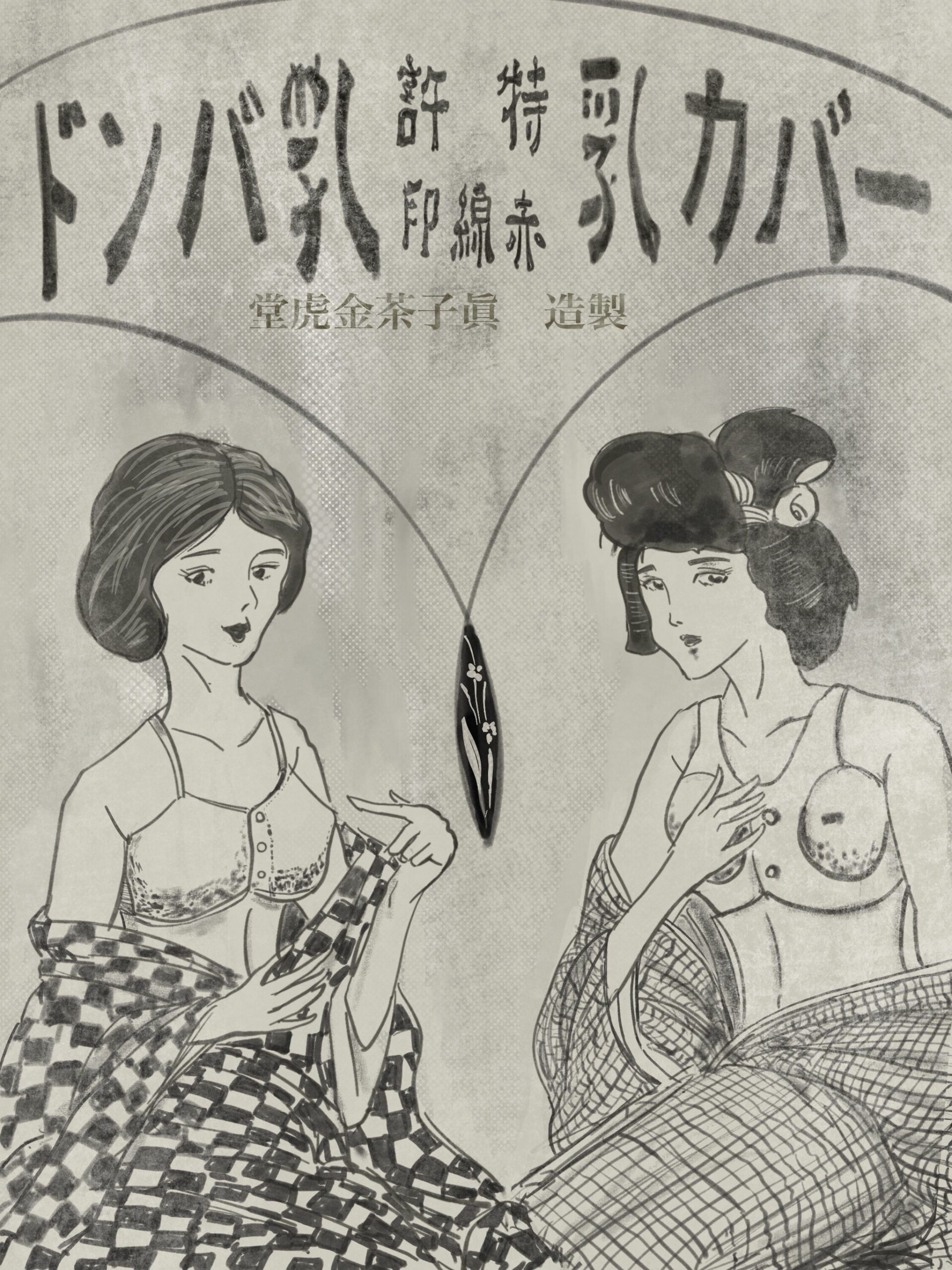
No Panties, No Bras in the Taisho Era
 姫だる
Out of nowhere, we have suddenly switched to an adults-only theme, huh? ♥
 殿だる
Behold the truth about underwear in the Taisho era!
Thanks to the influence of Demon Slayer, the Taisho era feels as if it has been promoted from the minor leagues to the major leagues. It is an era in which characters in kimono are the norm, so as source material for Taisho-romance illustrations, it is a wonderfully rich period to draw from.
Yet even in an era when Western dress was finally gaining acceptance, there was one thing that still had not: women’s underwear.
In Demon Slayer, too, Nezuko fights in many scenes, but she never really looks as if she is wearing panties, and Mitsuri Kanroji certainly never looks as if she is wearing a bra.
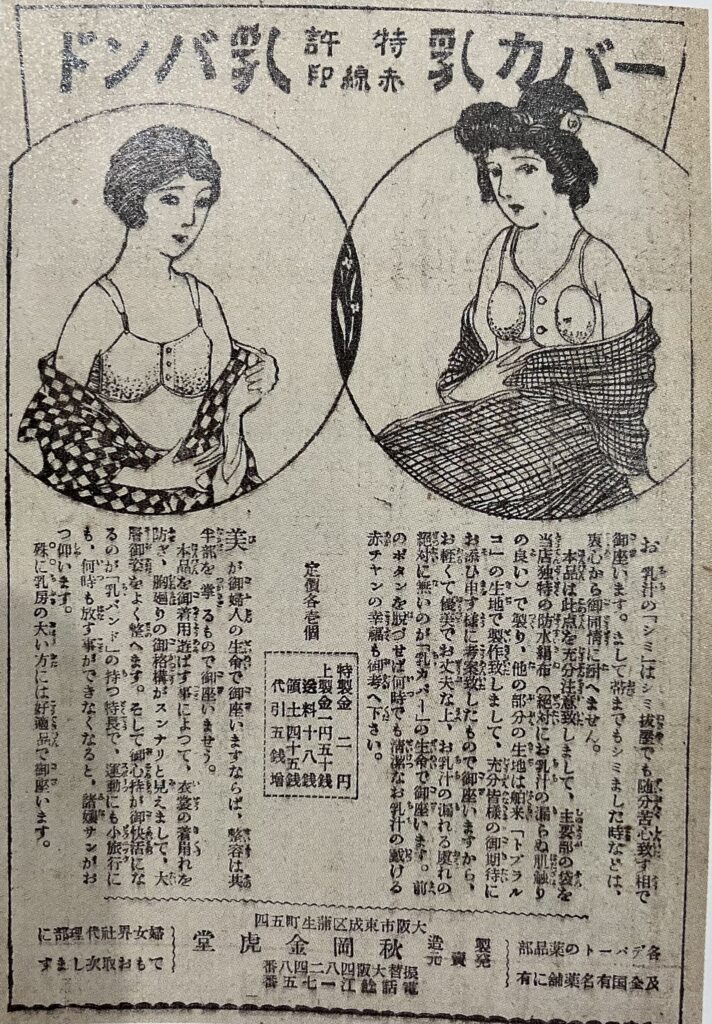
Once again, I decided to recreate in illustration a striking advertisement featured in Taisho Girls Collection, the book that inspired this piece.
Previous article: The story of “Taisho Romance,” drawn from an old photograph — read it here
The illustrations for this article were made in Procreate. I was 54 when I chose Procreate — here is why → Why I, in My 50s, Chose Procreate [My Toolbox, Vol. 3]The Breast Band: Its Purpose Was Preventing Stains
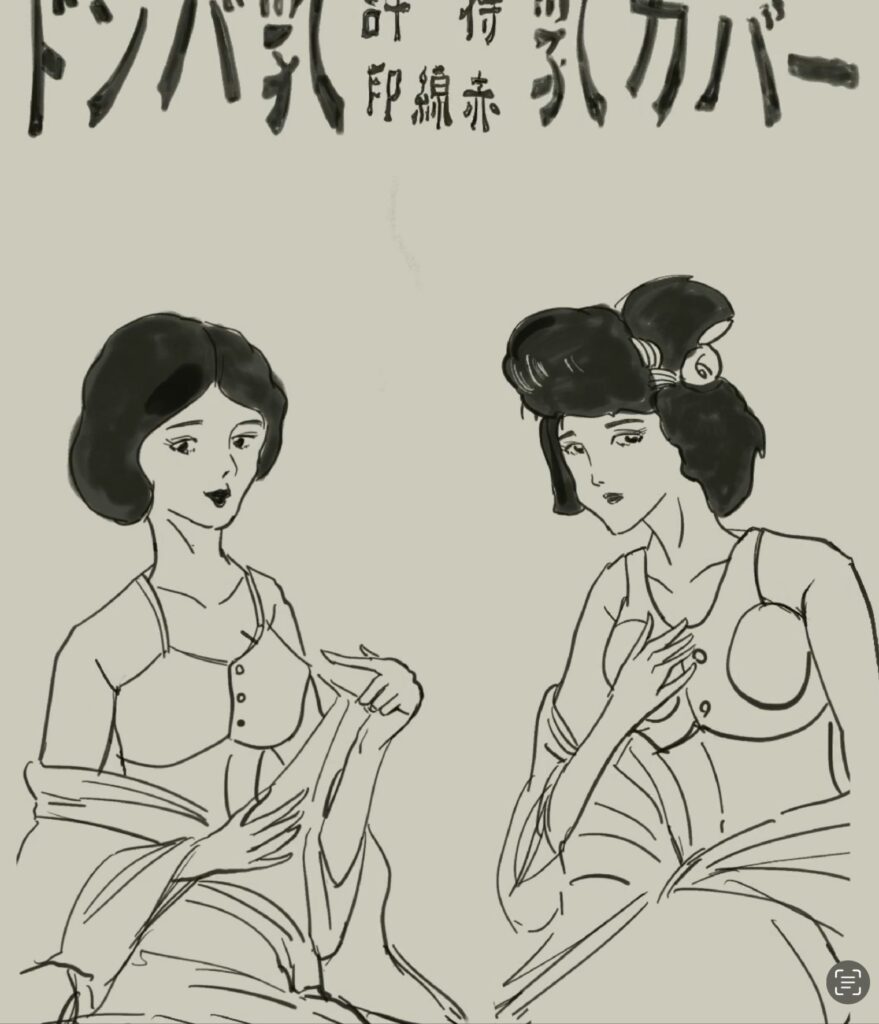
The motif this time is an advertisement from Taisho 15 (1926). Its name was “Breast Cover: Breast Band” — a title that today would be completely out of line. In those days, though, it was a perfectly serious product name. However times change, it is truly frightening.
There was no word for “bra” in those days. Reading the advertisement closely, I found that this breast band was said to be effective as a stain guard for the breasts. It tells us how much trouble people had removing stains from kimono in those days. In that sense, it is fascinating that its function was completely different from modern underwear.
From Taisho Style to Modern Style
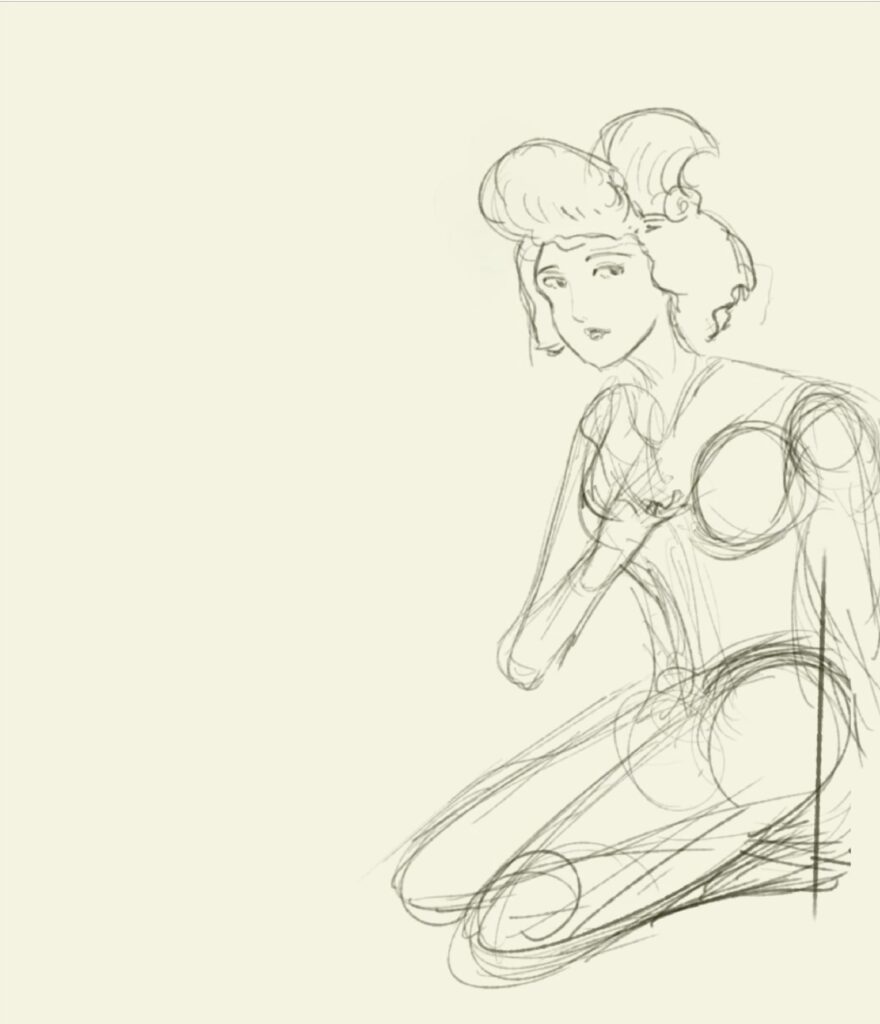
Now for the main illustration. I could have drawn it exactly as it was, but that would have looked a little old-fashioned (charming in its own way, though), so I redrew it in a more modern style.
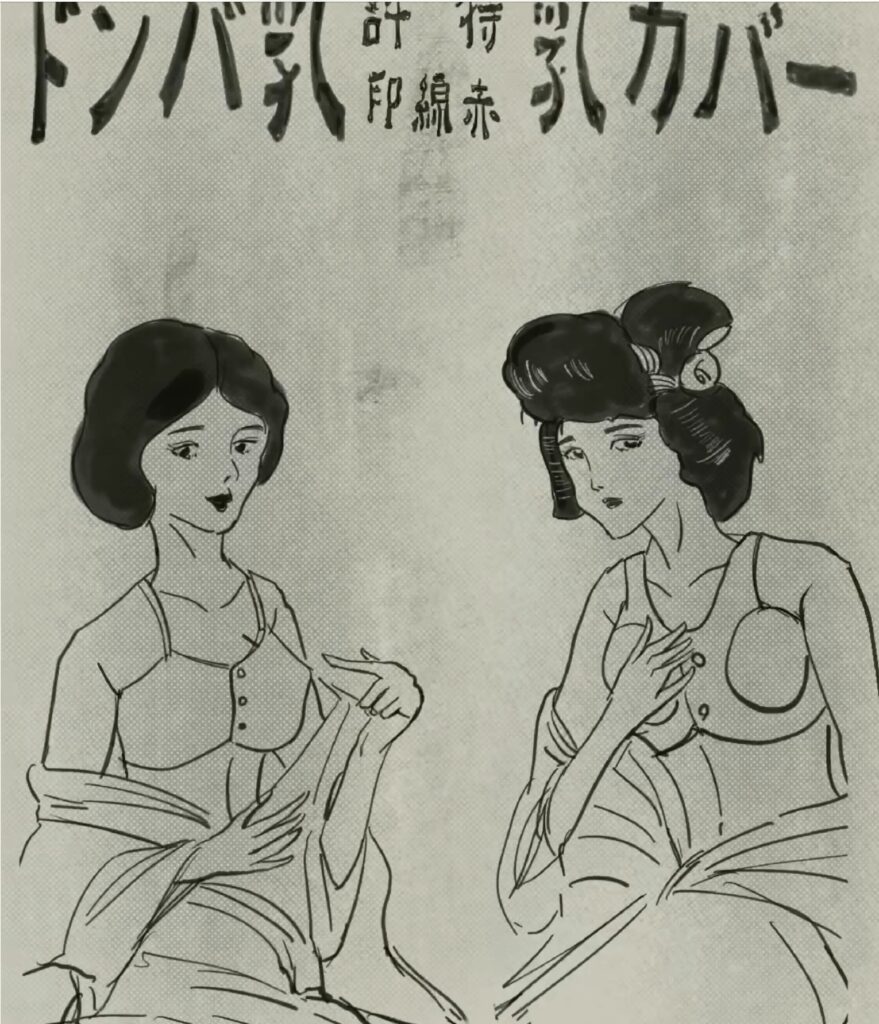
First, I sketched the women using a pencil brush. Kimono are still a little difficult for me, as I am not yet used to drawing them.
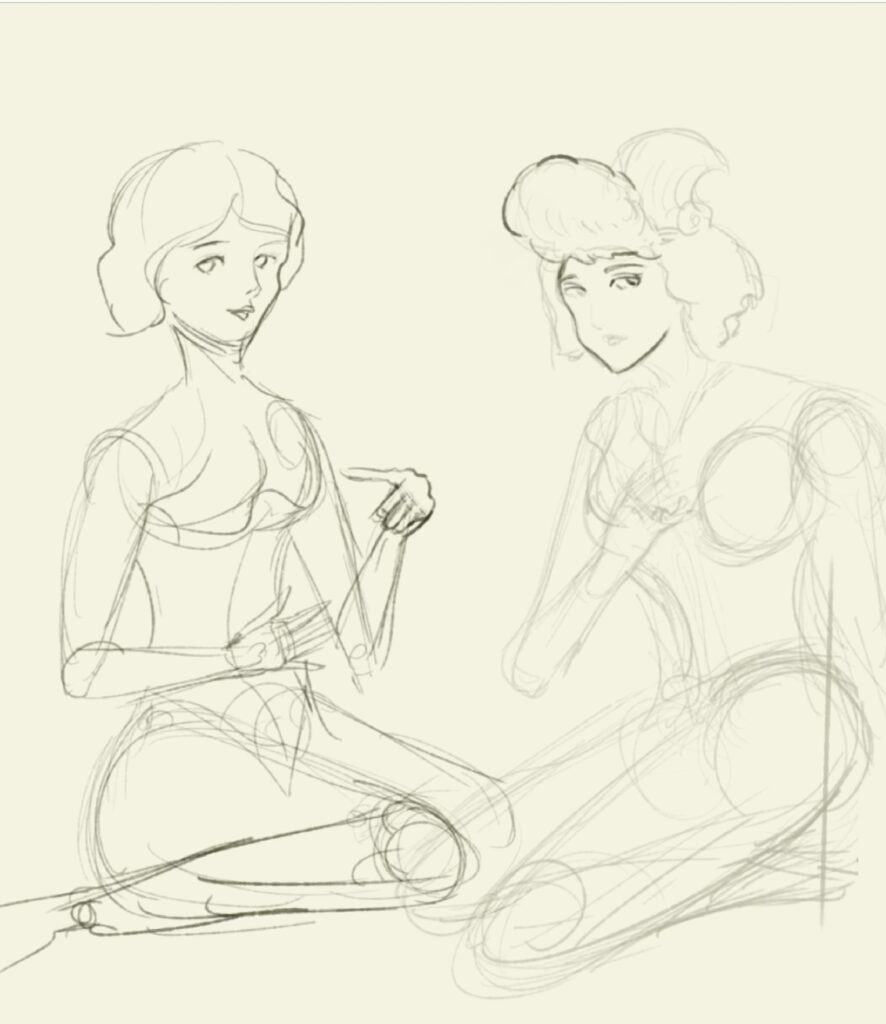
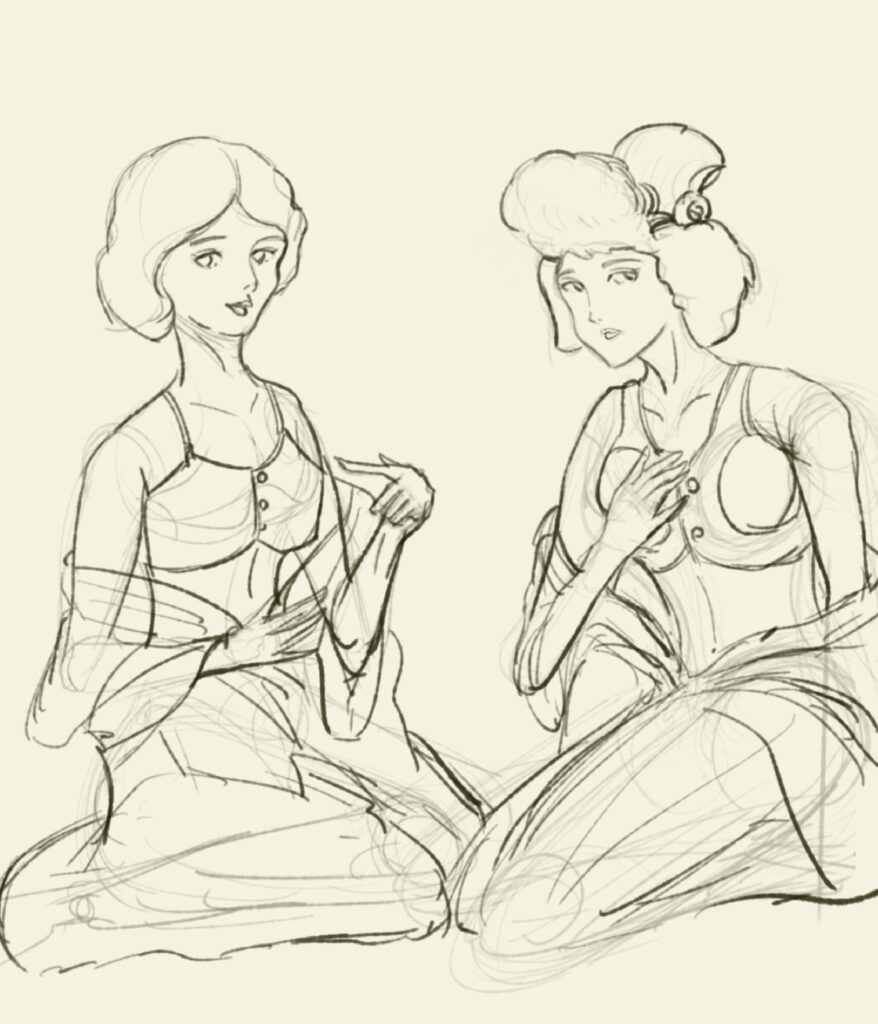
Donba or Band — Which Is the Truth?
After sketching the women, I worked on the main feature: the hand-lettering and the “Taisho-flavoured” background.
The lettering is entirely hand-drawn, and I struggled with its distinctive typeface. To bring out the Taisho flavour, I lowered the tone of the background colours and weathered it to create a faded feel. Does it have that atmosphere now, I wonder?
By the way, if you read this normally, does it say “Donba-chichi”!? For a while I thought that was the real reading, but on closer inspection, reading it backwards as “Chichi-bando” (breast band) is correct. However, “Chichi-kabaa” (breast cover) reads normally from the left, so it is a truly confusing layout, lol.
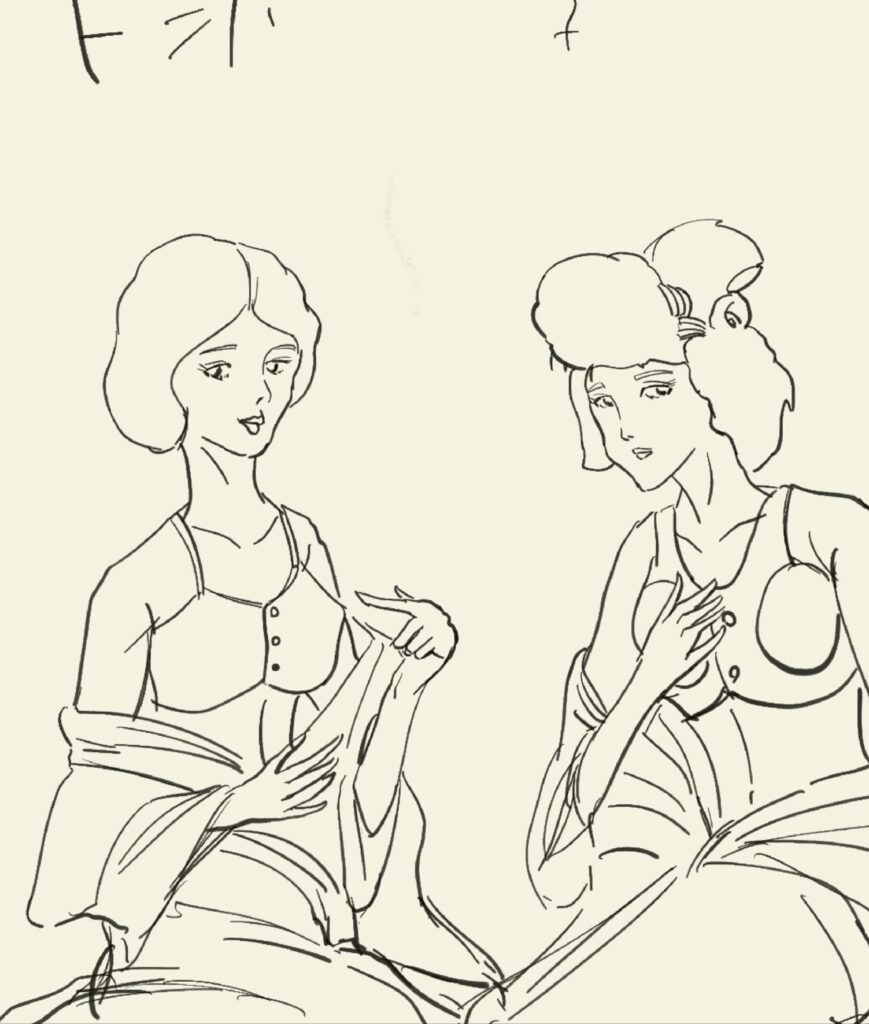
Finishing with a Soft Blur
In the final stage, I draw the kimono patterns. Here I use my usual pencil brush. It is a reliable tool that lets me draw even the finest details.
This could be the finished piece at this stage, but as a final touch, I applied a light white airbrush and pencil brush over it to express a faded feel.
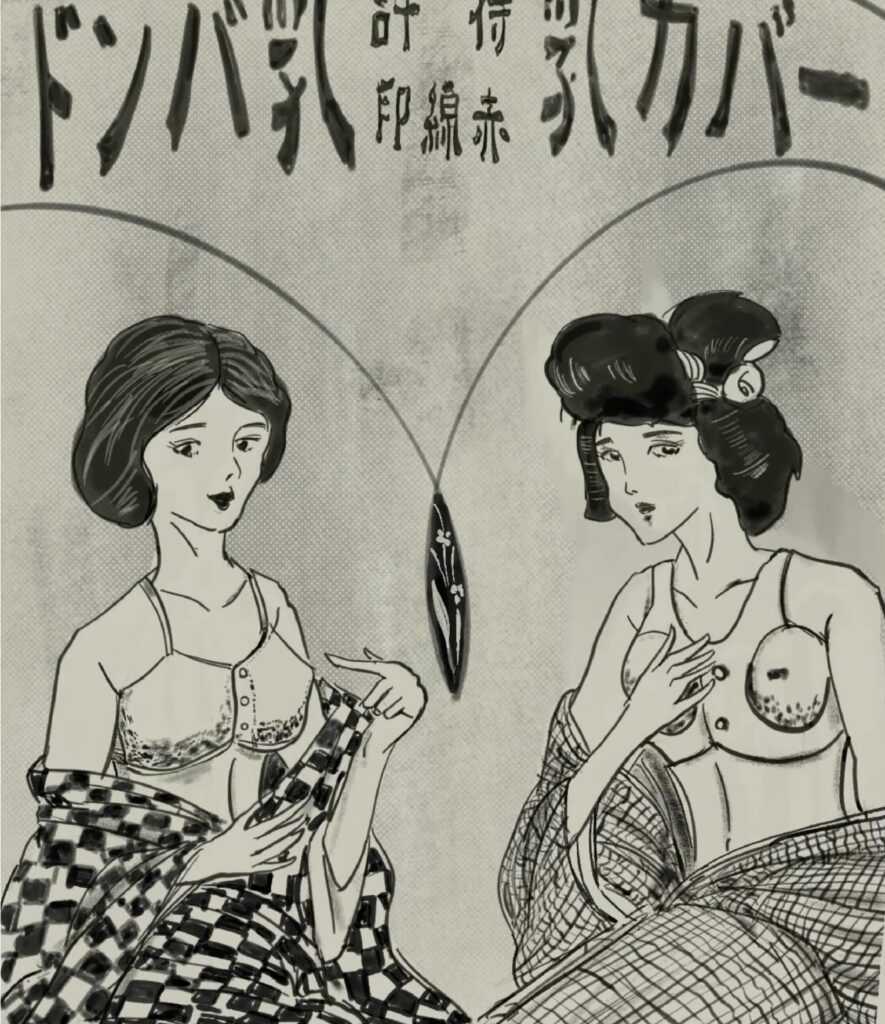
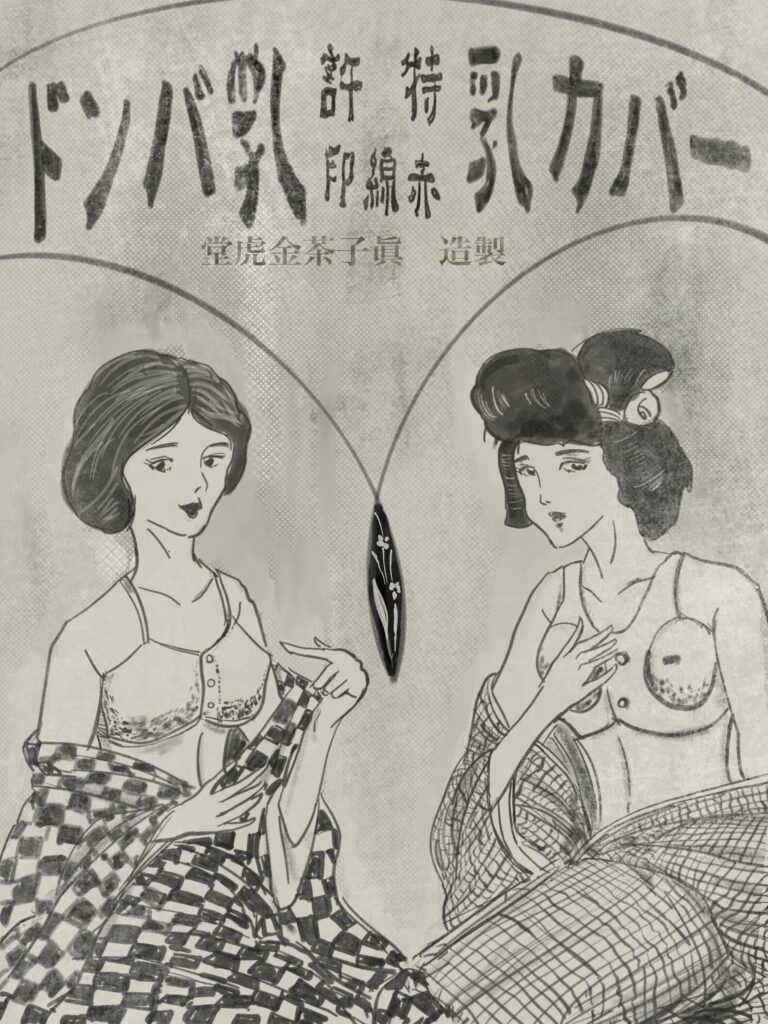
In drawing this series, I had always wanted to try recreating an advertisement illustration. This time I encountered a truly catchy advertisement, and thanks to it, I also learned about underwear in the Taisho era, lol.
Not just drawing, but learning about the historical background of the time may be one of the great pleasures of drawing period illustrations.
Related: The story of my illustration “Botchan” — read it here
I analysed with AI how this article was evaluated in Google search → How This Article on Taisho-Era Underwear Was Picked Up in Google Search [AI Tips, Vol. 11]If you have read this far, you probably love the world of Taisho romance. In fact, I also take portrait commissions for illustrations like these, created with careful attention to historical detail. If you would like a photograph of yourself or your family turned into a retro-style illustration, please feel free to contact me via the contact form.

Comments